CSBI is a program designed to help you distinguish between healthy and unhealthy riparian buffers and implement practices to improve buffer health. Unhealthy riparian buffers can contribute to erosion, property damage, and poor water quality.
A continuous streamside buffer naturally absorbs excess nutrients, breaks down pollutants, and filters out sediment from surface runoff, which improves water quality. A mature riparian buffer offers shade and cools water temperature, which supports aquatic life.
CSBI helps you with your streamside health concerns. If you answer yes to any of the below, please contact us.
Do you have lawn to the edge of your stream?
Do you have a single row of trees along your stream bank?
Have trees or shrubs been cut back along the stream?
Do you have populations of an invasive species, or think you might have an invasive species?
Have you noticed a small amount of erosion on your streambank?
Are you interested in learning about best practices for living streamside?
How does CSBI impact you?
Access to expertise, individualized assistance assessing your site and designing a planting plan, and native plants from experienced CSBI Coordinators – at no cost to you.
Each of the five counties in the Catskill region has a designated CSBI Coordinator responsible for working with streamside landowners. These coordinators work with you – sharing their knowledge, answering questions, visiting properties to help diagnose problems, and proposing and implementing solutions. Our coordinators provide ongoing support from your initial contact to post-project follow-up. We help you navigate any necessary permitting processes, share successes from other landowners, provide and install free native plants, and help you monitor the health of your streamside property.
Call or email a CSBI Coordinator to tell them about your streamside property concerns and questions.
Schedule a time for SWCD staff to visit your property.
During or after the visit, chat with a CSBI Coordinator about the recommendations for your streamside property.
If you like the recommendations, schedule a time for staff to return to your property for planting.
Take care of your riparian buffer! A booklet is provided that summarizes the recommendations for caring for your streamside property.
The Catskill Streams Buffer Initiative (CSBI)
Schoharie Basin CSBI Coordinator
Amanda Cabanillas, GCSWCD
Serving Greene & Schoharie County towns including: Gilboa, Conesville, Prattsville, Ashland, Windham, Jewett, Lexington, Hunter, Tannersville
Phone: (518) 622-3620 ext. 104
Ashokan Basin CSBI Coordinator
Bobby Taylor, UCSWCD
Serving Ulster County towns including: Woodstock, Shandaken, Hurley, Olive, Boiceville, Phoenicia, Chichester, Big Indian, Pine Hill
Phone: 845-688-3047
Rondout/Neversink Basin CSBI Coordinator
Gillian Mathews, Sullivan County SWCD
Serving Sullivan County towns including: Denning, Neversink, Grahamsville, Claryville
Phone: 845-985-2581
Manor Kill (Schoharie City) CSBI Coordinator
Peter M. Nichols, Schoharie County SWCD
Serving …
Phone: 518-234-4092
West and East Branch, Delaware Basin CSBI Coordinator
Catherine H. Skalda, DCSWCD
Serving Delaware County towns including: Stamford, Bovina, Delhi, Hamden, Walton, Tompkins, Roxbury, Middletown, Hardenburgh, Andes, Colchester, Fleischmanns, Arkville, Margaretville, Halcottsville, Halcott
Phone: 607-865-5223
Opportunities to learn about current issues affecting riparian areas and what you can do to protect your stream side property
We offer a range of educational workshops, events, and resources to provide you with critical information about living streamside. You can participate in programs with other landowners and learn from their experiences, share ideas and concerns, explore characteristics of specific Catskill native plant species, learn about invasive species, and contribute to improving the overall health of our riparian communities.
⋆.𓆝.ೃ࿔ ݁𓆟:・𓆞༄
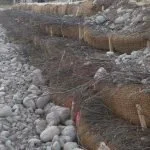
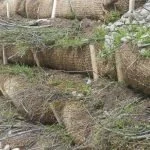
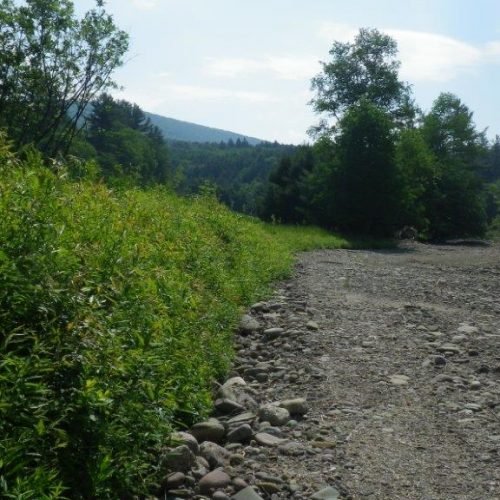
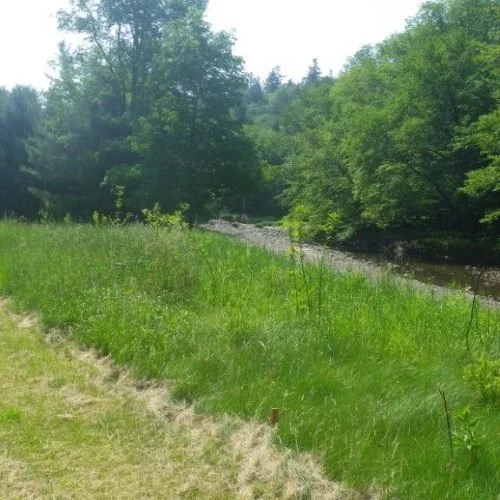
One unique CSBI project highlight in 2012 involved the stabilization and reforestation of a riparian buffer along the East Branch of the Neversink River using a soil lift and willow brush layering bioengineering technique. This project spanned across the eroding bank along two adjacent parcels for a total length of 500 linear feet. The soil lifts, created from coir erosion control materials, provide a resistance to the erosive forces brought about by high stream flows. Live native willow cuttings carefully placed in between each soil lift provide soil stability through complex root systems, and add roughness to the stream bank to slow flow velocities and further prevent bank erosion. Juvenile trees and shrubs were planted along the top of the stream bank to provide additional root structure and soil stability, as well as the buffering of storm water runoff from upland sources.
CSBI Success Story: Geo-Soil Lift in the Neversink Watershed
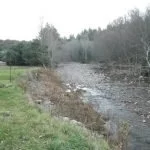
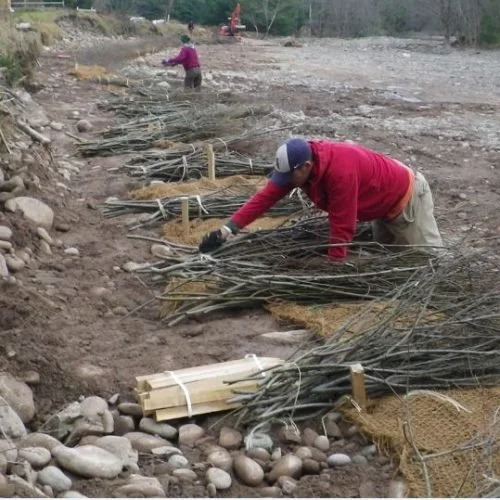
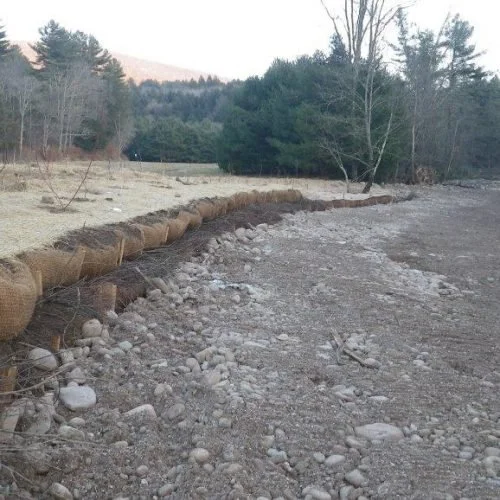
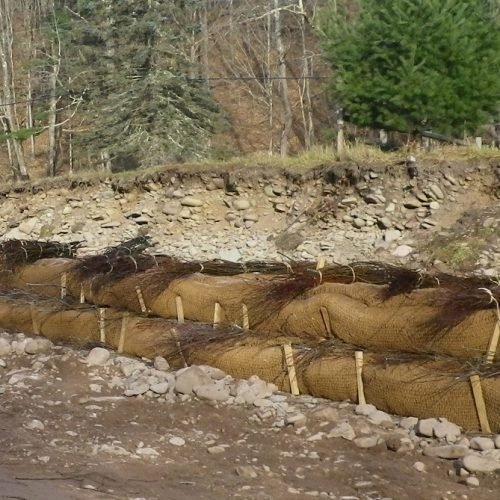
“My shoreline along the Neversink River was experiencing erosion which seems to have accelerated as a result of recent increases in flooding in the Catskill region. I wanted to stabilize the shoreline using a natural approach and the Rondout Neversink Stream Program provided the expertise and resources to accomplish this goal. The shoreline stabilization reintroduced natural plantings along the stream bank and along an upland buffer. The shoreline has had one full growing season and everything has exceeded my expectations so far. The natural vegetation has taken hold and the buffer has brought wildlife back to this area. I would definitely recommend Rondout Neversink Stream Program to anyone who wants a natural approach to solving complex environmental issues.” - Land Owner